Sustainability / Field report
Ibusa · Oshimili North · Delta State

Sustainability, by design.

One integrated, zero-waste farm in Ibusa — palm, crops, livestock and freshwater fish — run so the land, the waterways and the people are better off for it.
0h
from bunch to mill
0m
buffer on every waterway
0%
of the team is local
0:1
native trees per tree removed
At Spring Valley Ranch Ltd, Ibusa, we farm with Delta State in mind. We produce sustainable palm oil, palm kernel oil, food crops, livestock, and freshwater fish in one integrated, zero-waste system that protects our land, our people, and our waterways.
Our core commitment
01
No deforestation.
02
No burning.
03
No exploitation.
04
Zero waste.
Operating under
  • RSPO-Aligned
  • NAFDAC
  • SON
  • NOSDRA
  • Fed. Min. of Environment

Our operations comply with Federal Ministry of Environment, NOSDRA, and Delta State Ministry of Agriculture environmental guidelines.

The loop

Nothing leaves this farm as waste.

Fresh fruit reaches the mill within a day of harvest. Nothing the mill rejects is thrown away: fibre and shell fire the boiler, effluent becomes biogas, kernel cake feeds the livestock, and the compost goes back into the blocks.

Six steps. The sixth returns to the first.
01.

Palm plantation

Previously farmed land, community consent, NIFOR Tenera seedlings.

02.

24-hour mill

FFB milled within a day for low-FFA crude palm oil.

03.

Palm kernel cake

High-protein feed for our livestock and fish.

04.

Livestock & fish

Ndama cattle, goats, tilapia and catfish.

05.

Biogas & shell fuel

POME to a sealed digester; shells fire the boiler.

06.

Compost & EFB

Mulch and compost return to the Ibusa blocks.

01
Palm plantation

Palm Plantation — Ibusa

Every block sits on previously farmed, degraded farmland. No forest reserve, no sacred grove.
  • No Deforestation in Ibusa We do not plant in forest reserves or community sacred groves. All our blocks are on previously farmed, degraded farmland within Ibusa / Oshimili North, with community consent and documented land agreements.
  • Zero Burning — Fully Compliant In line with Delta State anti-bush burning law, we practice 100% zero-burn for replanting and land prep.
  • Soil Protection for Delta Soils We use Empty Fruit Bunch (EFB) mulching, frond stacking, and Mucuna cover crops to protect our sandy-loam soils from erosion during heavy rains.
  • IPM We use barn owls, weevils for pollination, and neem-based controls to reduce chemical pesticide use. No aerial spraying near homes or streams.
  • High-Yield Tenera We use NIFOR-sourced improved Tenera seedlings to produce more oil per hectare — more yield, less land pressure.
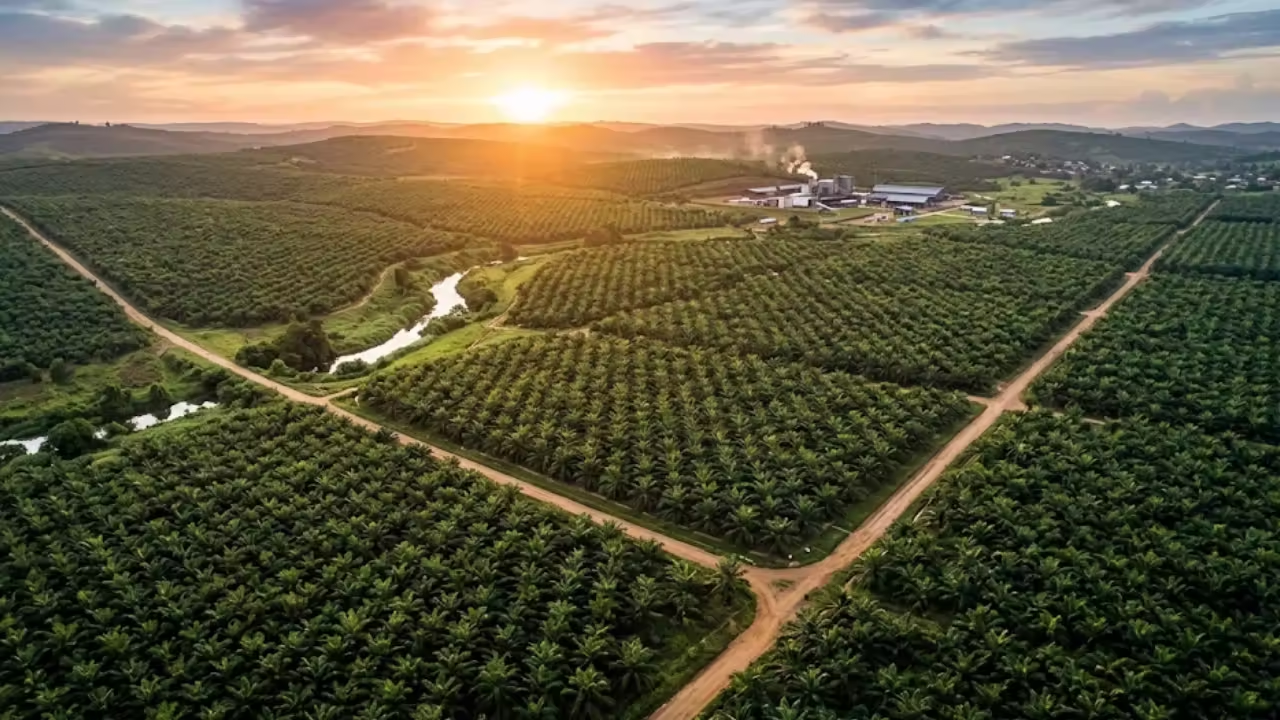
Aerial view of an oil palm estate at sunset with the processing mill on the horizon
Ibusa blocks, with the mill on the horizon.
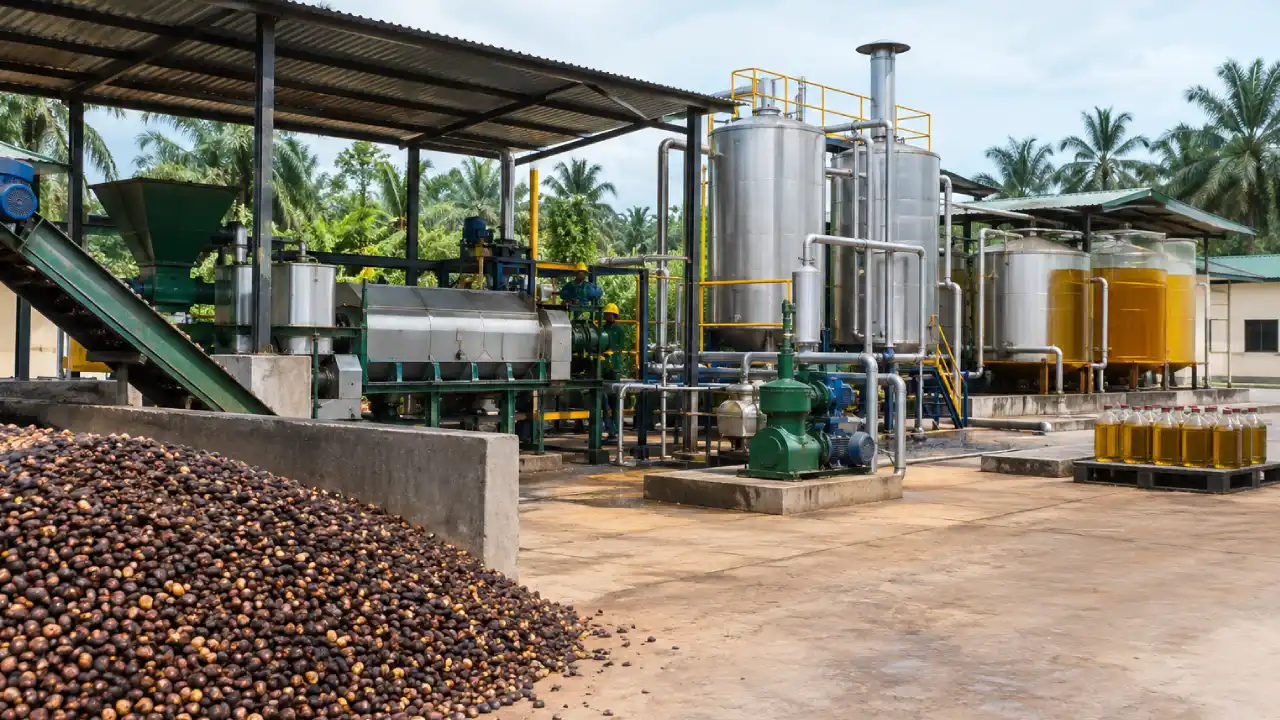
Oil palm kernel processing plant at Spring Valley Ranch
The kernel plant. Every stream has a destination.
02
Milling

Palm Oil & Palm Kernel Oil Milling

Fruit reaches the mill within a day. What the mill cannot sell, it feeds back into the farm.
  • 24-Hour Processing Fresh Fruit Bunches (FFB) from our Ibusa plantation are milled within 24 hours at our local mill for low FFA, high-quality crude palm oil.
  • Zero-Waste Mill — Our Circular Model EFB and fibre become compost; shells become biomass fuel; POME drives a sealed biogas digester; palm kernel cake becomes feed.
  • No Pollution of Ani and Atakpo Streams All effluent is treated. No discharge into community rivers or creeks. We maintain 50m buffer zones along all waterways.
  • Food Safety & Traceability 100% traceable to our Ibusa blocks. Produced under SON and NAFDAC food safety standards. No adulteration, no Sudan IV.
03
Intercropping

Other Crops — Intercropping System

Food for Ibusa while the plantation matures — grown in the alleys, not on new land.
  • We intercrop maize, cassava, yam, vegetables, and plantain in young palm areas to ensure food security for Ibusa community.
  • Composted manure from livestock for fertilizer.
  • Rainwater harvesting + small earth dam for dry season irrigation.
  • No banned agrochemicals (we comply with the NAFDAC banned list).
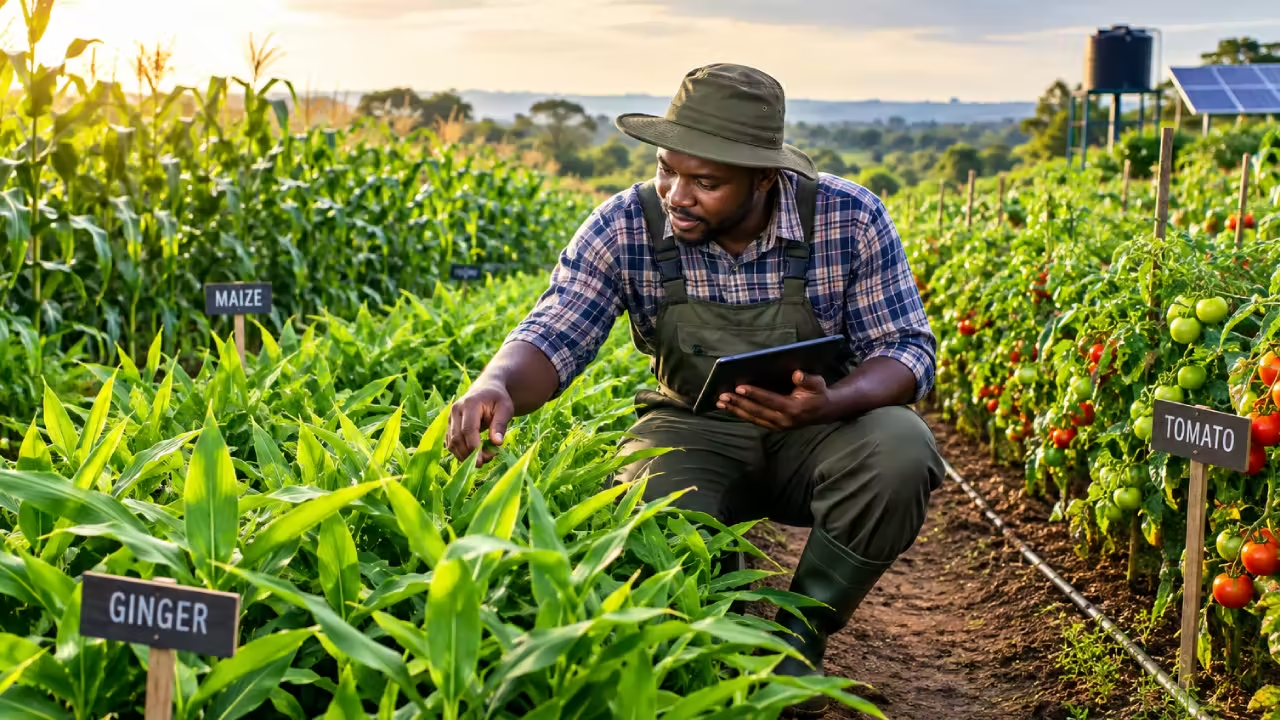
Farmer inspecting maize plants beside beds labelled ginger, maize and tomato
Maize, ginger and tomato beds between young palms.
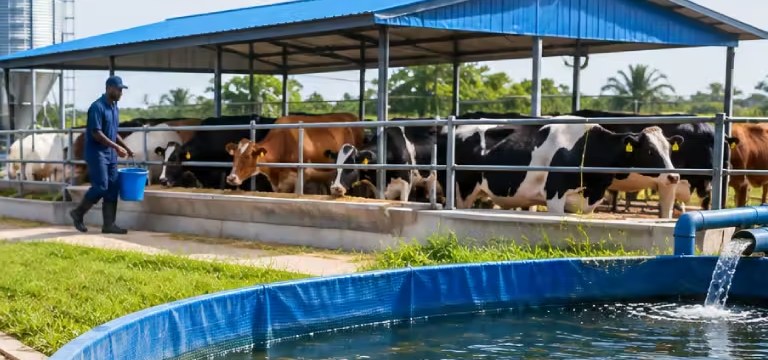
Dairy cattle feeding at a trough under a shaded open-sided shed
Cattle under shade, fed on farm-grown cake and bran.
04
Livestock

Livestock — Cattle, Goats, Poultry

They graze the palm alleys, eat the mill’s cake, and their dung goes back to the digester.
  • Integrated Grazing Our goats and Ndama cattle graze natural cover in palm alleys — natural weed control + natural fertilizer.
  • Feed from the Farm 40–50% feed from our own PKC, maize bran, and cassava peels — reducing feed cost and waste.
  • Animal Welfare Humane handling, no growth hormones, veterinary care by a licensed vet in Asaba/Ibusa.
  • Zero Waste All dung goes to biogas + compost, then back to the plantation.
05
Aquaculture

Freshwater Fish — Tilapia & Catfish

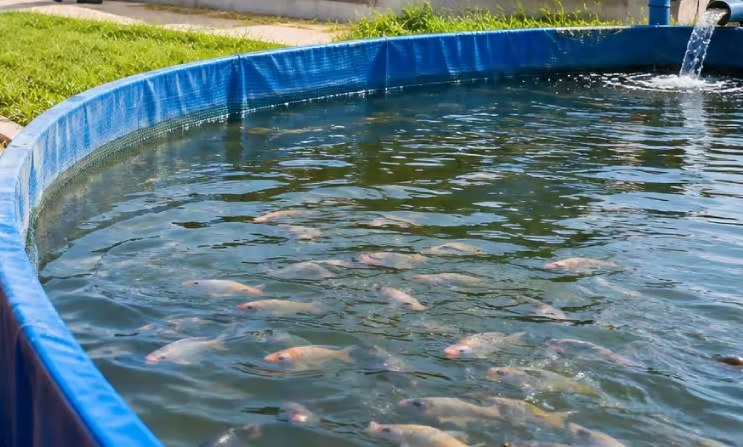
Rain-fed ponds. Partial recirculation. Pond water irrigates the crops instead of draining away.
  • Responsible Aquaculture in Ibusa Earthen and concrete ponds using rain-fed water. No wild fingerling capture.
  • Water Stewardship We practice partial recirculation. Nutrient-rich fish pond water is used to irrigate crops. No wastewater discharged into community water sources.
  • Natural Feeding Formulated feed using PKC, moringa leaf, and local ingredients to reduce expensive imported fishmeal.
  • No Antibiotics No routine antibiotics. Healthy pond management only.
Lined fish pond stocked with tilapia, with water flowing in from a pipe
Rain-fed pond, stocked with tilapia.
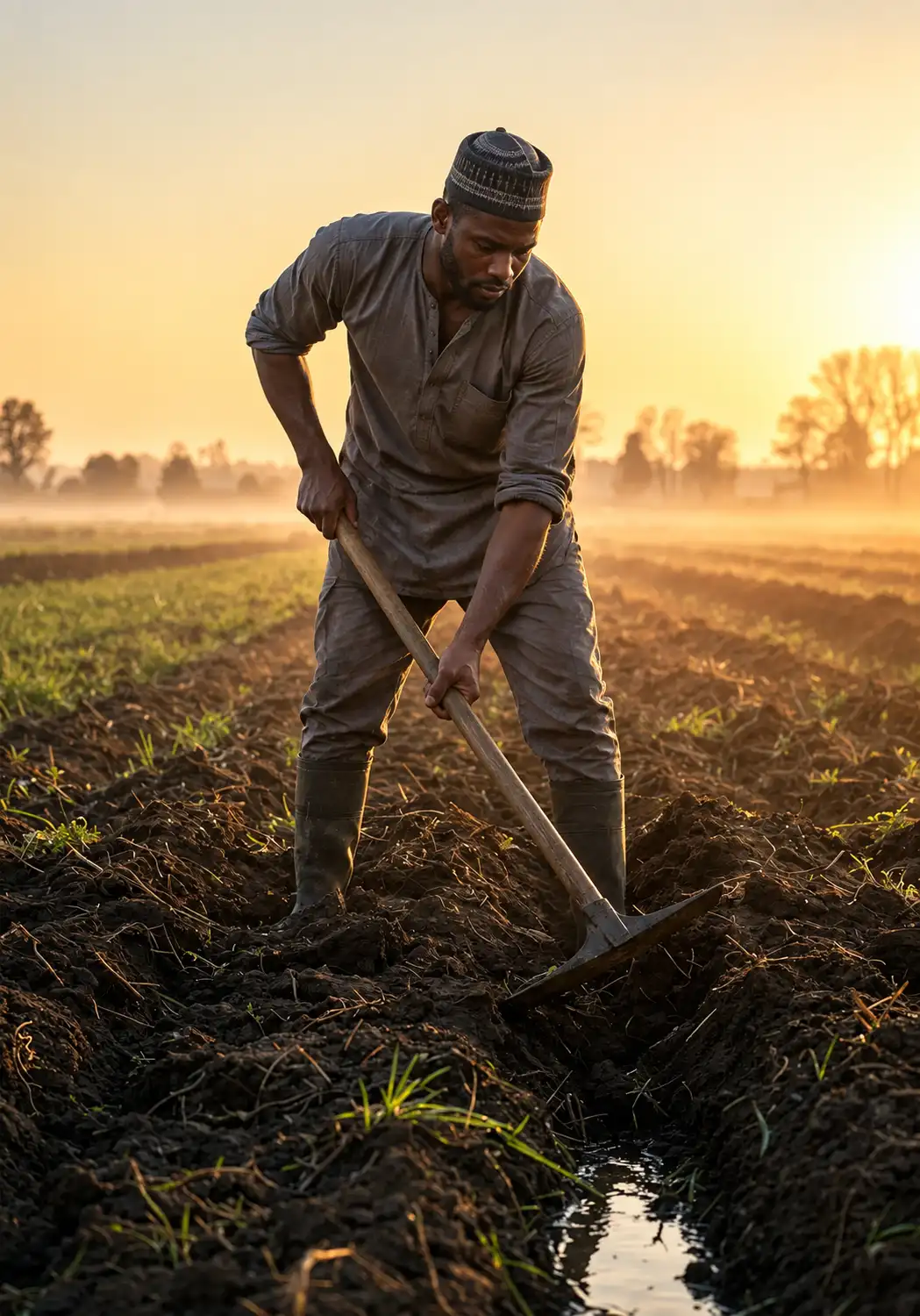
Farmer clearing a drainage trench by hand in a field at dawn
Drainage work at dawn — water kept where it belongs.

06

Environment & energy

Environment & Energy for Delta State

Methane captured instead of vented. Shells burned instead of diesel. Ten native trees for every one removed.
  • Energy Biogas from POME powers our mill. Palm kernel shells power our boiler. We are adding solar pumps for the fish farm to reduce diesel and noise.
  • Climate Action By capturing methane and composting EFB, we cut greenhouse gas emissions significantly versus open dumping/burning common in Delta State.
  • Biodiversity We protect indigenous trees (Iroko, Mahogany), maintain wildlife corridors, and plant 10 native trees for every one removed during replanting.

07

People

Our People — Ibusa & Oshimili North

Eighty per cent of the team lives in the communities the farm depends on.
  • Community First 80% of our workforce is from Ibusa and surrounding Oshimili North communities. Fair wages above minimum wage, PPE, safety training.
  • No Child Labour, No Forced Labour Strict compliance with the Nigerian Labour Act.
  • Smallholder Support We buy FFB from Ibusa smallholders at transparent, fair-gate prices and train them in best practices with NIFOR.
  • Community Development Annual scholarship support for farm workers’ children and support for Ibusa health centre.
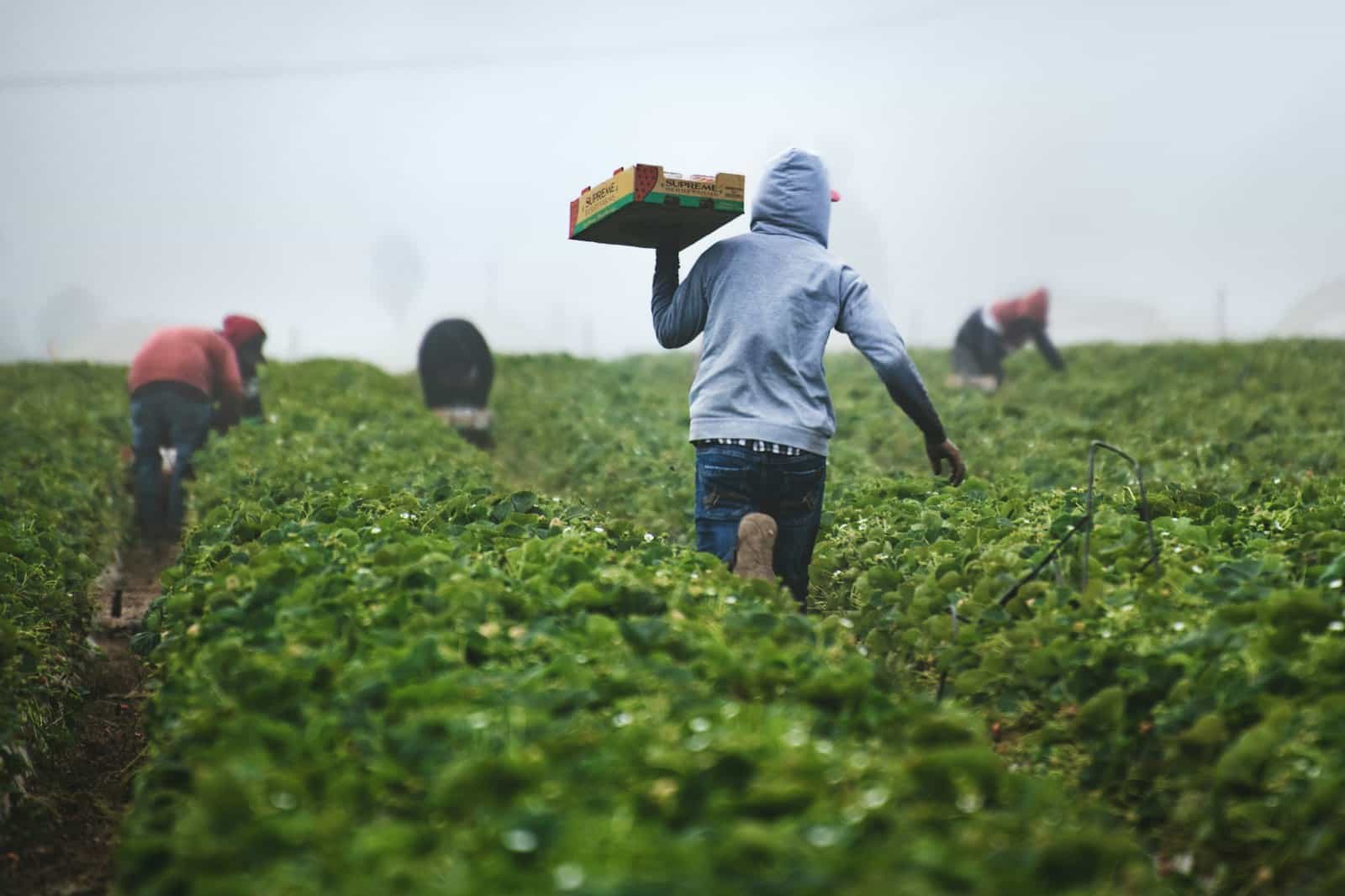
Workers harvesting and carrying produce across a field
Harvest day, Ibusa.

Horizon

Our 2030 goal for Ibusa farm.

  • Fully RSPO Certified & Nigerian Organic Certified
  • 100% Renewable Energy for Processing
  • 100% Zero-Waste Circular Farm
  • Become Delta State’s Model Integrated Farm for Palm, Crops, Livestock & Fish

From Ibusa soil to global market — if the soil is healthy, the animals are healthy, the fish are healthy, then our community and customers are healthy.

Spring Valley Ranch · operating principle

Visit or partner with us

Come and walk the loop.

Off-take, smallholder supply, certification files or a site visit — talk to the team that runs the farm.