
For many businesses, raw materials are one of the biggest risks hiding inside the supply chain.
When supply is inconsistent, everything downstream feels it.
Production slows down. Prices become harder to predict. Quality varies. Planning becomes difficult.
And when the raw material is agricultural, these challenges can become even more complicated.
Weather changes. Market conditions shift. Production volumes fluctuate.
So what if businesses could take greater control of the supply they depend on?
That is where agricultural backward integration comes in.
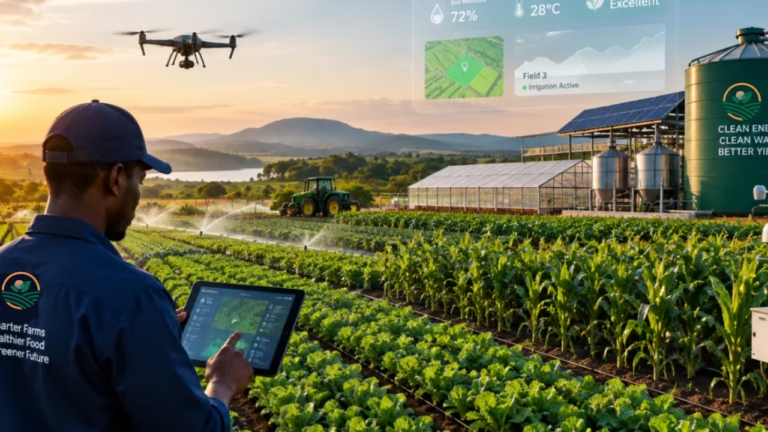
At Spring Valley Ranch, we provide companies with an opportunity to partner with us in developing selected crops that meet their raw material requirements.
It is a different way of thinking about supply.
From Buying to Building
The traditional approach is straightforward.
A company needs raw materials, so it finds suppliers and buys from the market.
That model can work, but it can also leave businesses exposed to factors they cannot control.
Backward integration creates another option.
Instead of simply buying what is available, a business can participate in developing what it needs.
This does not necessarily mean the company has to become a farmer.
It means working with an agricultural partner that understands production and can help develop the required crop at the appropriate scale.
The result is a closer connection between the company and the source of its raw materials.
Turning Demand Into Production
Imagine a food manufacturer that requires a particular agricultural product throughout the year.
Instead of waiting for the open market to provide whatever quantity is available, the company can work with an agricultural partner to plan production around its needs.
The conversation changes from:
“What is available?”
to:
“What do you need us to produce?”
That difference is powerful.
It allows agricultural production to become more demand-driven.
Crop selection can be based on actual business requirements.
Production volumes can be planned.
Quality expectations can be considered from the beginning.
And market access can be clearer before the crop reaches harvest.
Why This Matters
Raw material security is becoming increasingly important for businesses operating in food, manufacturing and other industries that rely on agricultural inputs.
A disruption at the beginning of the supply chain can eventually affect the customer at the end of it.
That is why businesses are increasingly looking for ways to strengthen their supply chains.
Agricultural partnerships can play an important role in that process.
By developing crops at scale for specific requirements, businesses can build a stronger relationship with the source of their raw materials.
For agricultural producers, this also creates greater certainty.
Instead of producing without a clear market, production can be aligned with actual demand.
It becomes a relationship built around shared value.
More Than a Supplier Relationship
At Spring Valley Ranch, we see these partnerships as more than conventional supplier arrangements.
They are opportunities to build agricultural systems around specific commercial needs.
Our role is to bring agricultural land, production capability and farm management together with market demand.
The partner brings an understanding of its raw material requirements and commercial needs.
Together, both sides can work toward a production model designed around those requirements.
This approach can also create opportunities for expansion.
As demand grows, production can potentially grow with it.
That creates a more sustainable relationship than simply buying and selling agricultural products from one season to the next.
Building Raw Material Security
Africa’s agricultural potential is enormous.
But turning that potential into reliable industrial supply requires stronger connections between agriculture and business.
Farmers need markets.
Businesses need raw materials.
Processors need consistent supply.
And consumers need reliable access to finished products.
Backward integration helps connect these needs.
At Spring Valley Ranch, we are building our agricultural operations with this opportunity in mind.
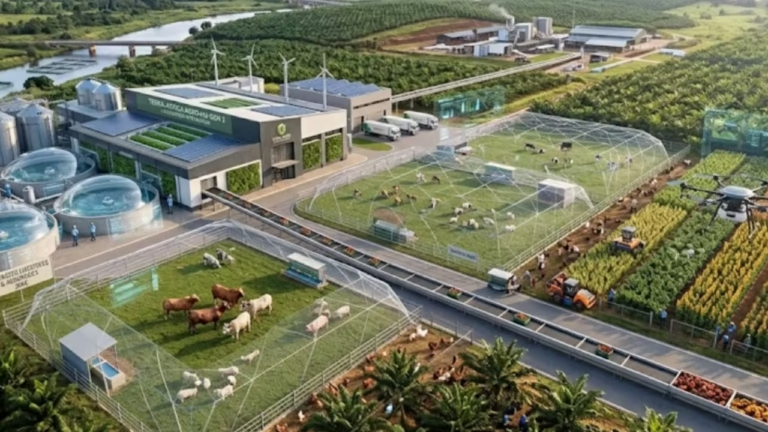
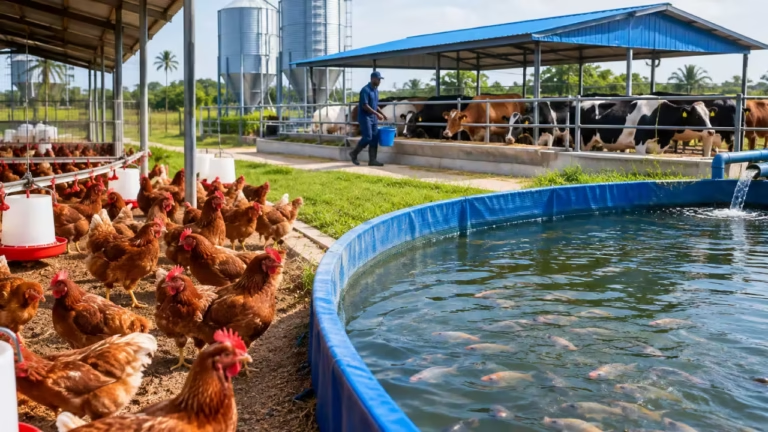
From palm plantation development to cash crop production, our objective is to develop productive agricultural systems that can support both local and wider markets.
For businesses looking to secure agricultural raw materials, the opportunity may not simply be finding another supplier.
It may be building the supply itself.
Your supply chain does not have to begin at the warehouse. Sometimes, it starts with the soil.